
The Feedback Founders Stop Getting | Full Send Management
Share
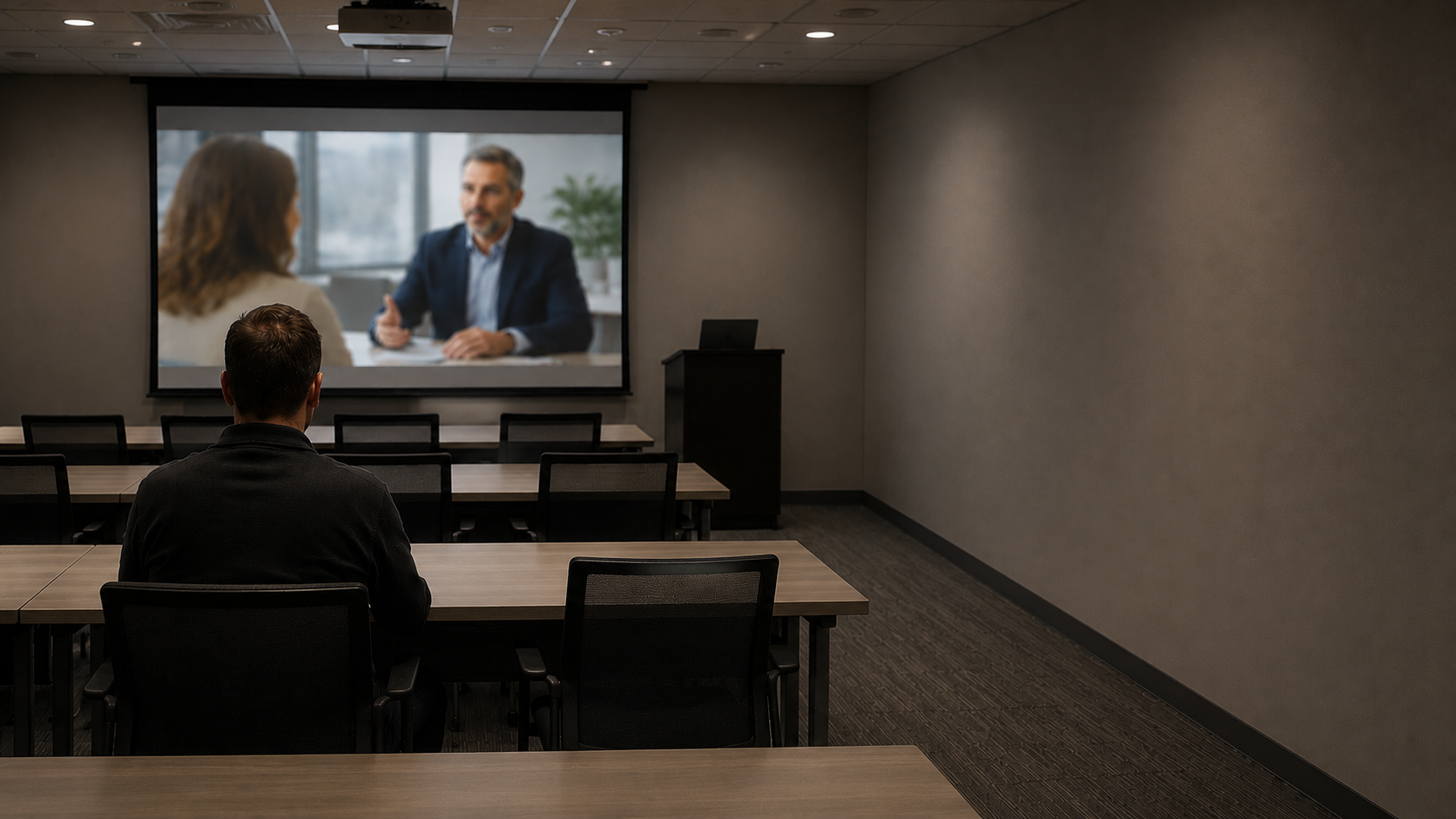
The film room at Arizona wasn't what you'd picture. It was carpeted, comfortable, the kind of room you'd find in any office building. I was a walk-on sitting in the back, and Coach Babers had a clip up on the screen of me dropping a ball I should have caught. He ran it forward, ran it back, ran it forward again. Then he stopped it, turned toward the back of the room, and said, "...and you wonder why."
That was the whole coaching moment. He moved to the next clip.
Man, that sucked. Thirty-plus years later I can still put myself in that chair.
Here's what people get wrong about walking on. It isn't that nothing is guaranteed, because nothing is guaranteed for anybody on that roster. The difference is the math on your mistakes. A recruited player gets ten chances to prove the drop was an accident, and a walk-on gets one. So every rep carries the weight of a last play in a game you're losing. It's a mistake-free zone, where errors never get averaged into a larger body of work. They just get counted.
Most founders start in that exact zone. The wrong hire in year one isn't a learning experience, it's payroll you can't make. You watch your own tape every night because there's nobody else in the building qualified to watch it and nothing between you and the consequence.
Then it works. You get to $5, or $12, or $30 million, and something changes that almost nobody names out loud. You build margin. Cash in the bank, a real team, a brand that carries you through a bad quarter, relationships that forgive a dropped ball. That margin is the point of building the thing, and I'd never tell anybody to give it back.
But margin also buys you the ability to stop noticing. A missed call in year one showed up in the bank account by Friday. The same missed call at $30 million disappears into the average, and you'll probably never feel it land. Over enough time the reps stop carrying weight, not because you got soft, but because nothing is coming back to tell you they mattered.
What stayed with me wasn't the humiliation. It was that somebody was paying close enough attention to connect the drop to the outcome, and said it out loud. He wasn't trying to hurt me or build me up. He was describing what he saw.
I've used that line on teams that were coasting and didn't know it, and on my own kids.
I still watch film. Every email, every coaching call, every one of these newsletters. I can tell you which sentence two weeks ago cost me comments. That's the walk-on still running, and I don't think I'd have the habit without those years.
But there's a ceiling on reviewing your own tape and I hit it a long time ago. You can't see your own drop the way somebody watching can, which is why I work with two coaches to stop the clip on me. That doesn't get less necessary as this grows. It gets more necessary, because the margin thickens while the feedback gets quieter.
The founders I talk with have the opposite arrangement. Nobody has stopped the clip on them in years, and they haven't noticed, because the margin is doing exactly what they built it to do.
So what's your line? The one somebody said years ago that you can still hear word for word. Who said it, and what were you doing?